Gardening Cranford: Recycling and Sustainability
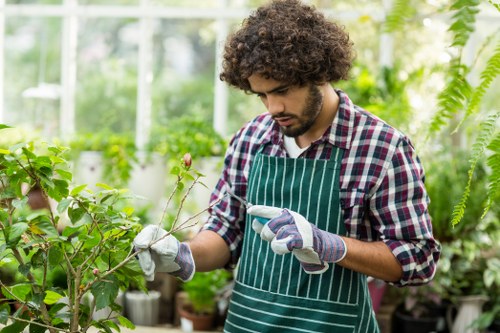 At Gardening Cranford we believe every green space in Cranford can be part of a low-waste future. This page outlines our approach to an eco-friendly waste disposal area and a sustainable rubbish gardening area that supports local biodiversity, reduces landfill, and improves soil health. We combine practical garden care with community-focused recycling so that Cranford gardening becomes synonymous with circular, low-impact practices.
Our sustainability approach for Gardening in Cranford
We align with the borough's sustainable waste ambitions and the broader London approach to separation: organics, paper and card, rigid plastics, glass and general waste kept distinct for efficient processing. Our program complements municipal kerbside schemes and civic amenity sites, working within existing collection streams while promoting additional local reuse and home-composting options to reduce dependence on landfill.
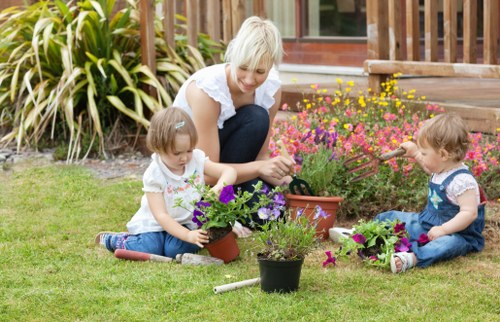 Our immediate recycling percentage target focuses on green and garden waste. Gardening Cranford aims for a 70% recycling rate of garden and related waste streams by 2030, with an interim five-year milestone of 55%. These targets cover grass cuttings, prunings, woody stems, soil reuse, and clean plastic plant pots. We report progress regularly and adapt to borough-level policy on waste separation to help meet community targets.
Local transfer stations and civic facilities play a key role in landfill diversion. We work closely with nearby transfer depots and recycling parks in the borough, ensuring green waste is delivered to facilities that prioritise composting, anaerobic digestion or approved wood-processing. Our recommended list for local drop-off and collection includes:
- Local civic amenity and Hounslow-area recycling parks for bulky garden waste
- Composting hubs and community greenhouses that accept clean green waste
- Specialist wood-recycling yards for larger branches and timber from garden work
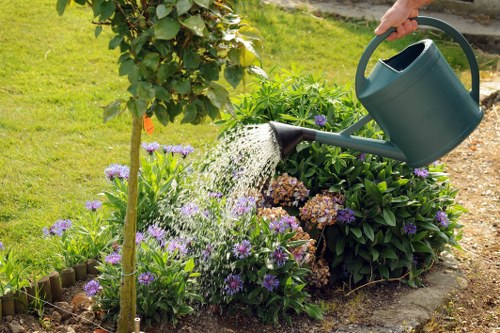 We maintain partnerships with charities and reuse organisations to keep materials in circulation. Excess plants, pots, soil in good condition, and salvageable garden furniture are offered to community groups, neighbourhood swaps, and local charities. These collaborations reduce disposal volumes and support social projects: community allotments, educational schemes, and local environmental charities often benefit from redistributed gardening materials.
In the sustainable rubbish gardening area we promote on-site separation points: labelled bins for organics, containers for recyclable plastics and glass, a dedicated area for rehoming plants, and a small clean-wood stack. Gardening Cranford combines practical signage, volunteer stewardship, and training so that householders and gardeners know how to sort materials correctly and follow the borough’s guidance on waste separation.
To lower transport emissions we operate a fleet of low-carbon vans and prioritise electric vehicles wherever charging infrastructure allows. Our logistics include route optimisation, shared collections for nearby streets, and low-emission replacements for diesel vehicles. These measures collectively reduce the carbon footprint of garden waste collection and support a greener Cranford gardening network.
Types of recycling activities relevant to Cranford include composting grass cuttings and leaves, chipping woody trimmings into mulch, cleaning and reusing terracotta and plastic plant pots, and diverting soil for reuse in raised beds. We also encourage separation of materials at source to assist borough-level sorting for plastics, glass and cardboard.
Monitoring and accountability are central to our sustainability plan. We use simple audit methods to track tonnages diverted from landfill, the percentage of material reused, and reductions in transport emissions. Progress metrics include:
- Recycling percentage target: 70% garden waste recycling by 2030
- Annual reduction in collection miles through efficient routing
- Number of local partnerships established with charities and reuse centres
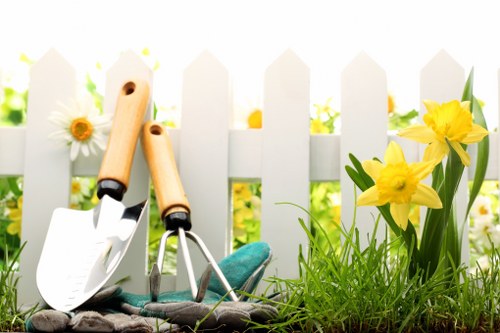 Our community hubs and sustainable garden areas provide drop-off and pick-up points where residents can leave clean green waste, swap plants, and collect compost. Cranford gardening benefits when neighbours share resources: soil mixes are blended on-site from reused material, and mulches are distributed to community planting projects to close local nutrient loops.
![A young woman and an older woman are working together in a well-maintained outdoor garden, planting or tending to the soil. The younger woman has blonde hair tied back and is wearing a blue checkered shirt, jeans, and gardening gloves, while the older woman has short hair, is wearing a wide-brimmed hat, a light jacket, and gardening gloves. They are kneeling on the soil bed, surrounded by garden tools, and appear to be engaged in gardening activities such as planting or weeding. In the background, there are green grass, leafy plants, and a partly cloudy sky, suggesting a bright and mild weather day. The garden layout features a clear, organized space with a defined edge of the flower bed, and lush greenery surrounds the scene, indicating a healthy outdoor environment maintained by local gardening services like Gardening Cranford. This outdoor space exemplifies sustainable gardening practices, emphasizing natural plant growth, soil care, and environmental harmony, relevant to the recycling and sustainability principles promoted at [PAGE_TITLE] and on the website gardeningcranford.co.uk, serving the Cranford area in the UK.](/pub/_photos/gardening/f1371619568.jpg) To conclude, Gardening Cranford champions an integrated, community-led model for recycling and sustainability. By combining ambitious recycling percentage targets, collaboration with local transfer stations, partnerships with charities, and a transition to low-carbon vans, we create a resilient, low-waste environment for garden maintenance. Join us in making Cranford garden-friendly, resourcewise, and greener for future seasons.
To conclude, Gardening Cranford champions an integrated, community-led model for recycling and sustainability. By combining ambitious recycling percentage targets, collaboration with local transfer stations, partnerships with charities, and a transition to low-carbon vans, we create a resilient, low-waste environment for garden maintenance. Join us in making Cranford garden-friendly, resourcewise, and greener for future seasons.